Prelude No. 13 in F# Major by Frédéric Chopin
José Rodríguez Alvira
Prelude No. 13 in F-sharp major is in ternary form. It begins with an eight-measure phrase based on a simple harmonic progression. Chopin uses an eighth-note pattern in the left hand with two non-harmonic tones, which are marked in the first few measures and repeated throughout the prelude, adding harmonic interest:

Robert Ståhlbrand, piano. Courtesy of Piano Society
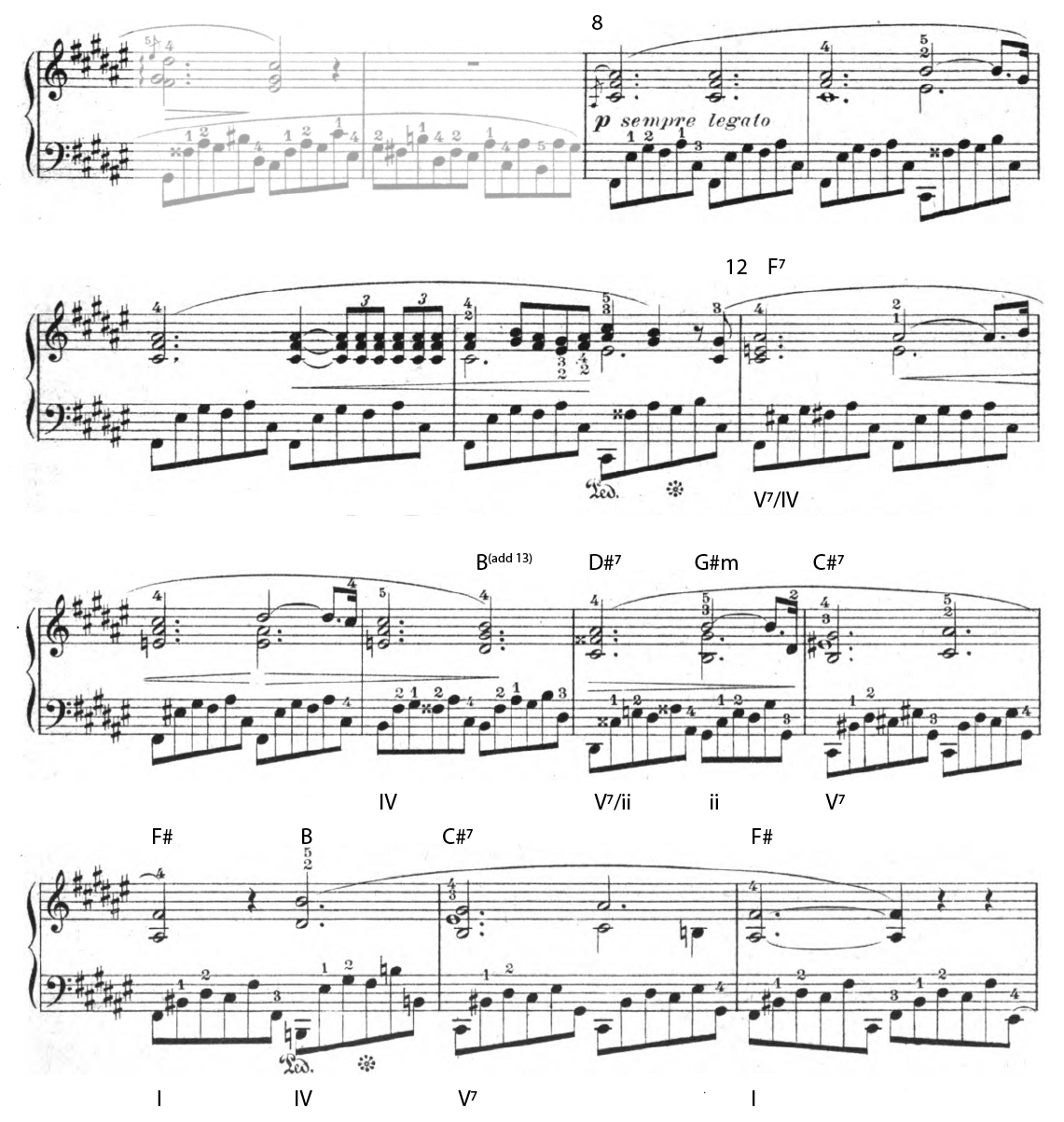
A second phrase begins in bar 8. The first four measures are similar to the previous phrase, but with some melodic variations. From bar 12 onwards, Chopin modifies the harmonic plan. The ten-measure phrase ends on a tonic chord:
Robert Ståhlbrand, piano. Courtesy of Piano Society
Section B begins in bar 20. This single-phrase section is in the relative minor key of D♯ minor. It moves through the keys of C# major, C# minor and B minor before returning to F# major for the recapitulation.
In this section, Chopin uses major seventh appoggiaturas (B♯ in bar 21 and A♯ in bar 23), as well as extensions of the thirteenth (G♯) in bars 24 and 25:

Robert Ståhlbrand, piano. Courtesy of Piano Society
In the recapitulation, Chopin uses only the second phrase of A, discarding the first four measures and adding several measures to conclude the prelude. We would like to draw your attention once again to the use of the thirteenth on the IV degree chord (G♯) in bar 33:

Robert Ståhlbrand, piano. Courtesy of Piano Society
Complete prelude:
Robert Ståhlbrand, piano. Courtesy of Piano Society
© 2019 José Rodríguez Alvira. Published by teoria.com
