Prelude No. 1 in C Major by Frédéric Chopin
José Rodríguez Alvira
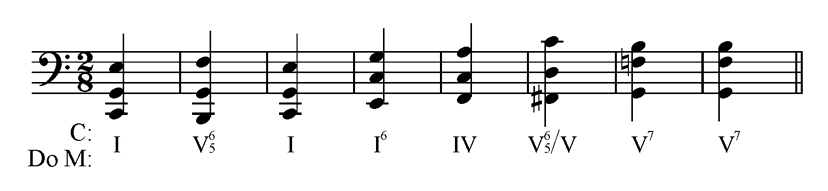
The prelude begins with an eight-measure phrase based on a simple harmonic progression:
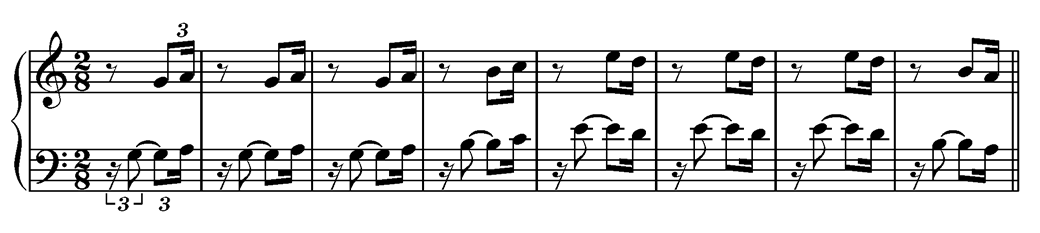
The first measure begins with an ascending second motive (G–A), repeated twice, and then transposed a major third in the fourth measure. In the fifth measure, this motive transforms into a descending second:

The melodic motif emerges as an inner voice that has transformed through augmentation:
Reading the 2/8 metre with triplets can be somewhat challenging:
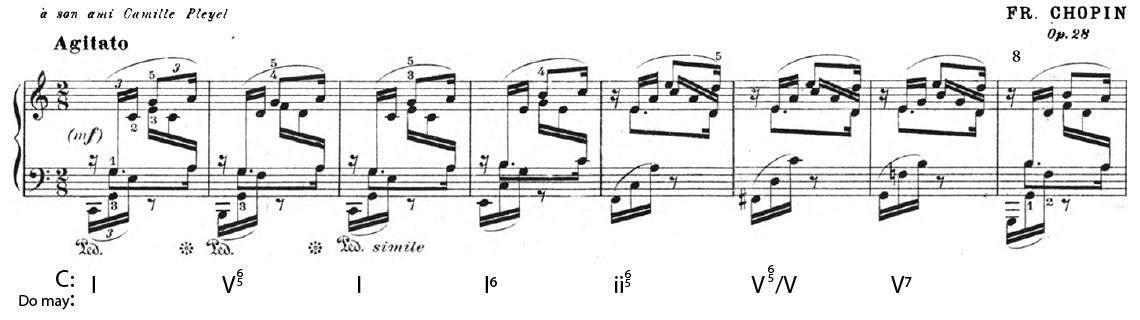
Robert Ståhlbrand, piano. Courtesy of Piano Society
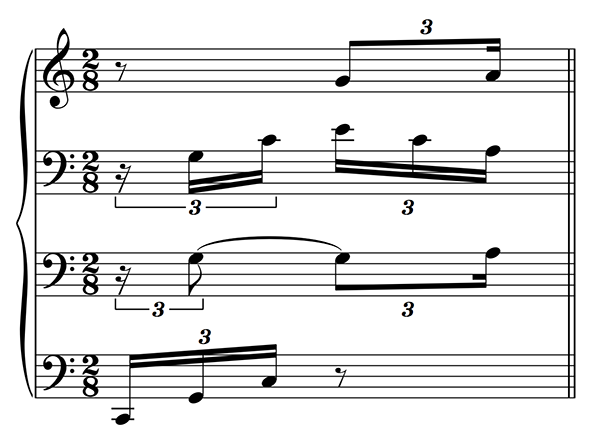
We can distinguish up to four voices in this dense musical texture:
The first four measures of the second phrase are identical to the first, but in measure 13, the ascending movement continues and the chromaticism increases:
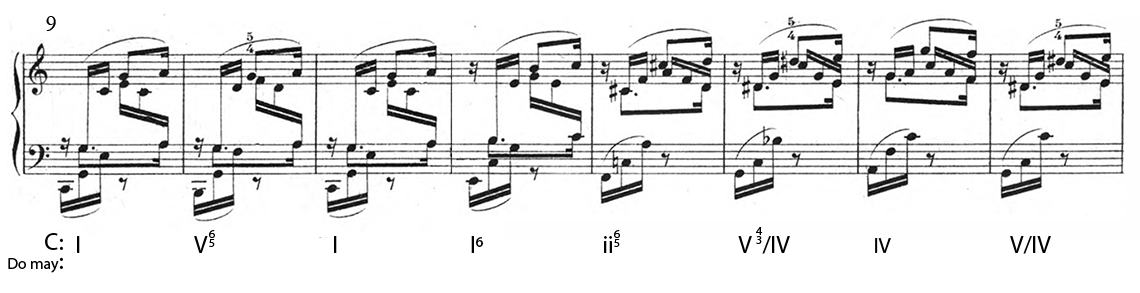
Robert Ståhlbrand, piano. Courtesy of Piano Society
The ascending motion and chromaticism continue into the third phrase:
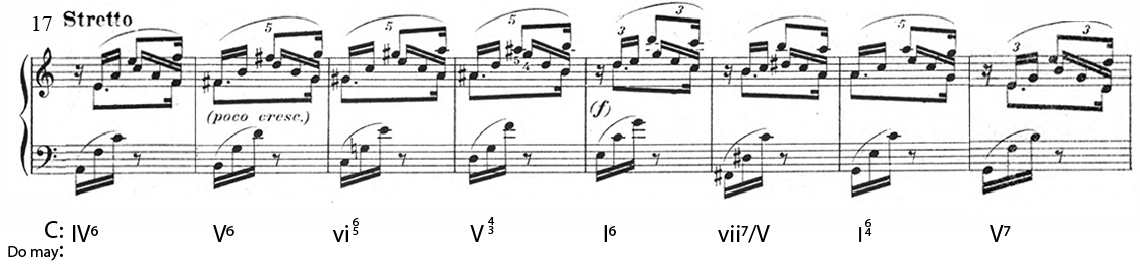
Robert Ståhlbrand, piano. Courtesy of Piano Society
Narcis Bonet suggests transcribing this prelude with a 6/16 time signature and changing to a 5/16 time signature for some of the measures following the stretto indication. Below, we present measures 17 to 24 of his transcription:
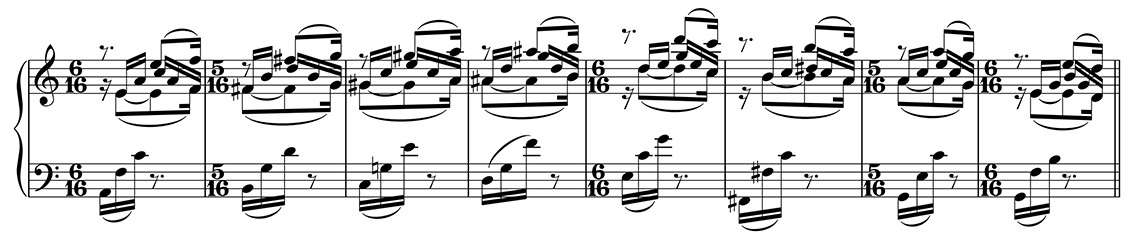
Transcription by Narcis Bonet
Narcis Bonet's article is available at Spanish, French and Catalan.
The prelude ends with the last phrase played over a tonic pedal:
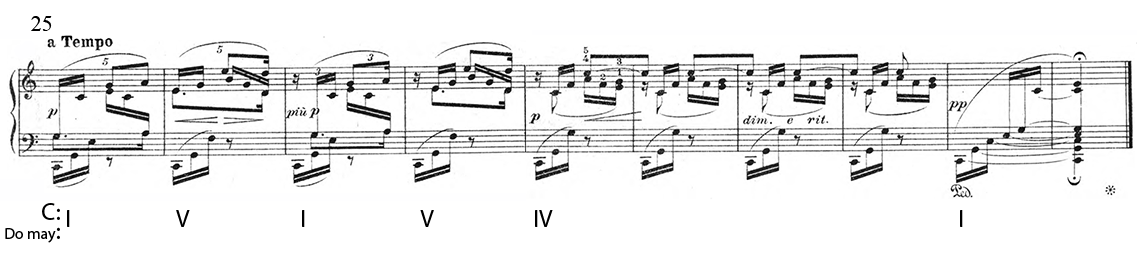
Robert Ståhlbrand, piano. Courtesy of Piano Society
Complete prelude:
Robert Ståhlbrand, piano. Courtesy of Piano Society
© 2019 José Rodríguez Alvira. Published by teoria.com
